Car won't start. How to ship it from abroad safely and without damage
Practical guide to transporting a non-running car from abroad. Definition of a non-runner, winch loading, low-deck loader, photo documentation, and documents.
A car bought in Germany, Belgium, or the Netherlands suddenly won't start. A flat battery, a cracked cylinder head, a failed transmission. The situation is not hopeless. We can safely transport a non-running vehicle home. In this guide we explain what exactly the term non-running car means, how loading works, and what materials the client should prepare.
What is a non-running vehicle from the carrier's perspective
In road transport, the term non-running is used in a narrow technical sense. We consider a vehicle non-running if it cannot move under its own power, but still meets the basic conditions for loading.
Three conditions for standard non-runner loading
- The wheels turn freely in all four hubs.
- The steering works. The wheel is not locked and the wheels can be turned.
- The brakes are not permanently seized.
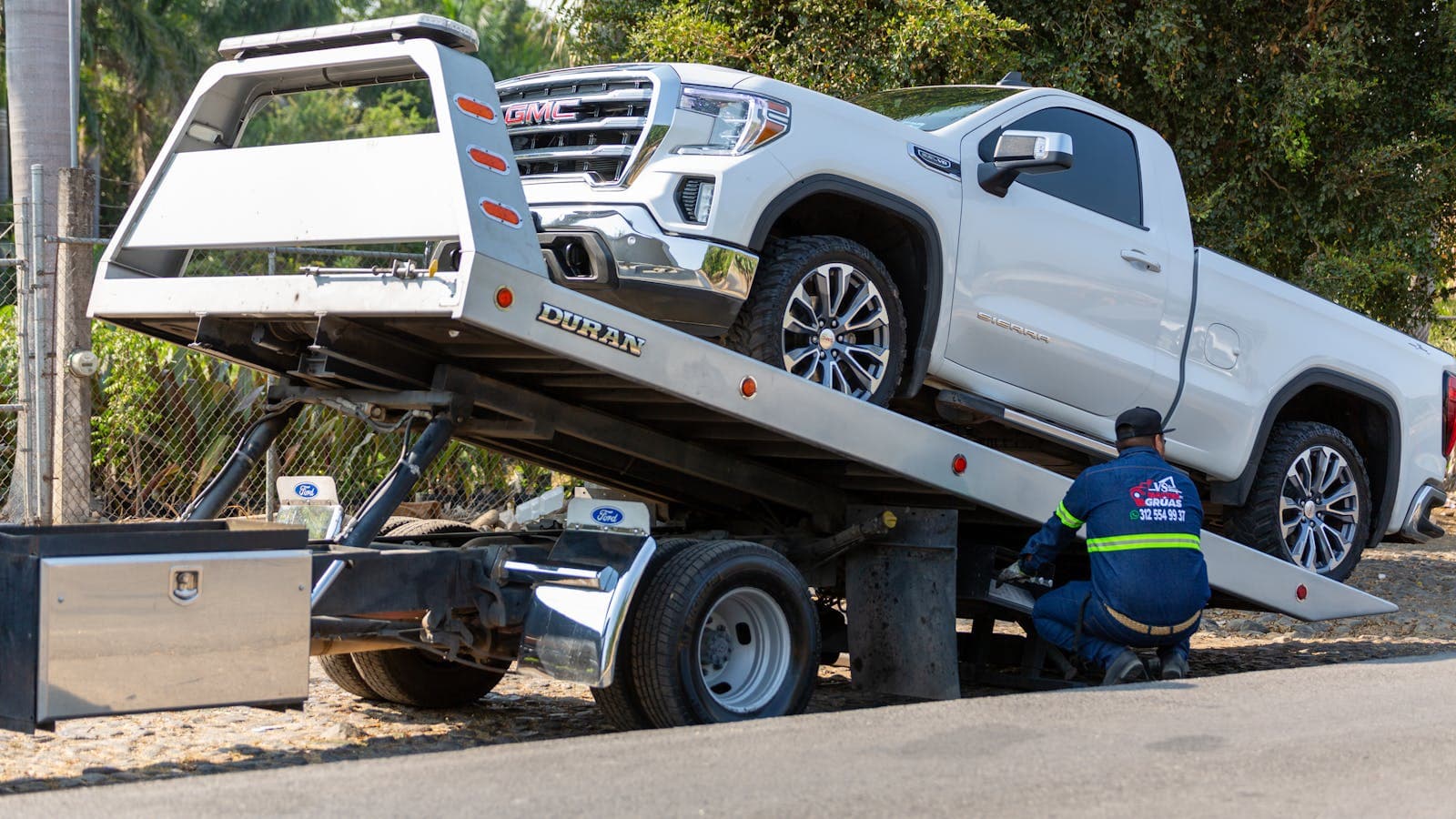
If these three points are met, we can load the car using a winch onto a low-deck loader. The vehicle is slowly pulled onto the platform and fixed in place. This procedure is standard for a broken engine, a flat battery, or a non-functioning transmission.
When the wheels are seized or the chassis is deformed
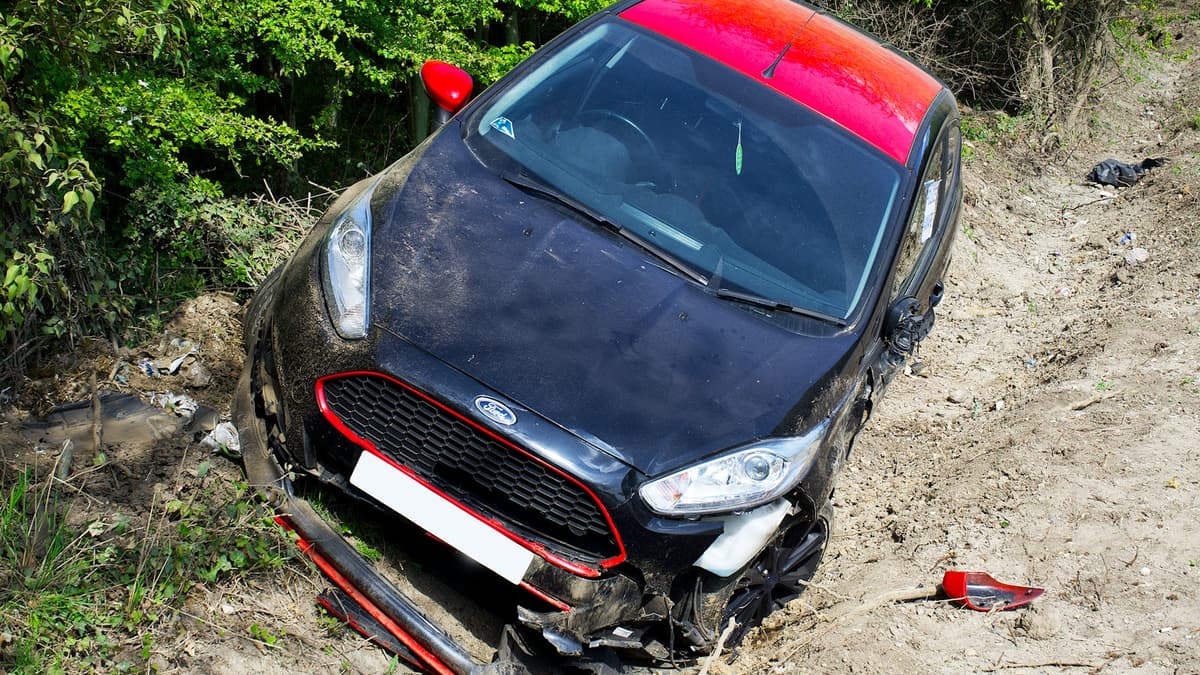
If the wheels do not turn or the chassis is damaged after an accident, the solution is different. Special equipment is required, sometimes a forklift in combination with skid plates. In such cases, we always request photo documentation first to choose the right type of truck and procedure.
How winch loading works
A winch is an electric or hydraulic puller with a steel cable or composite strap. The driver anchors it to a solid point on the body, most often a front or rear chassis hook. The car is then pulled evenly onto the low-deck platform with a slope of about ten degrees.
After loading we fix the vehicle with soft straps at four chassis points. Never around the chrome, fenders, or wheels with alloy rims. Soft straps are wide textile straps that do not damage the paint or chassis.
What the client should prepare before transport
Keys and documents
- At least one working key. Without a key, the car cannot be released from the brakes and loading is problematic.
- A copy of the registration document or proof of purchase.
- Invoice or contract from the seller, dealer, or auction such as Copart, IAAI, BCA, Manheim, Dekra, or Autorola.
- The VIN code in writing.
Vehicle condition
- Check fluid levels. The car should not move with a fully dry engine, even when only briefly shifted during loading.
- Release any engaged parking brake or inform the driver.
- Prepare a list of visible damage. For vehicles from auctions like Copart or IAAI, this record is critical.
VIN photo documentation before and after
We routinely produce photo documentation at loading and at unloading. A photo of the VIN, photos of all four sides of the body, photos of the interior, and photos of all visible damage. The client receives the file before departure and after delivery. This procedure protects both sides for any claims under CMR insurance and supplementary insurance.
The most common technical scenarios
Flat battery
The simplest case. The car is otherwise fine; it just does not start. The driver arrives with jumper cables or a booster. If the battery is completely gone, we load with a winch.
Cracked or seized engine
The engine does not turn, but the wheels do. Standard winch loading. No further damage occurs during transport, because the car does not move under its own power.
Failed transmission
An automatic transmission in P sometimes cannot be released. Many cars have a manual override via a button near the selector. The driver knows this procedure. With a manual transmission, neutral is enough.
A car from auction after a total loss
Vehicles from Copart, IAAI, or Manheim are often written off by the insurer. Before booking, we recommend sending photos and the auction report. Some total losses require a low-deck with skid plates. For collector cars or classics from RM Sotheby's and similar auctions, we offer an enclosed truck with air-ride and coverage above €500,000 by individual quote.
Insurance and coverage
Every shipment is covered by CMR insurance under the international convention. For higher values or specific risks, we add supplementary insurance. With a non-running vehicle, it is important that the photo documentation precisely captures the condition before loading. This eliminates disputes about which damage occurred before transport.
GPS tracking and 24/7 dispatch
After loading, you receive access to live GPS tracking. Position tracking is available continuously. Our dispatch operates 24/7. If an unexpected situation arises on the route, we communicate with the client immediately.
Frequently asked questions
My engine is completely broken. Will you load the car?
Yes. If the wheels turn freely and the steering works, we use a winch and a low-deck loader. The engine condition does not interfere with loading.
What if the wheels are seized after an accident?
In that case we need photo documentation in advance. Sometimes we place skid plates under the wheels or use special equipment. The solution is always individual.
Do I need to have an original key?
At least one working key is required. Without a key, the car cannot be released from the brakes nor have its steering unlocked. If you have lost the key, inform dispatch in advance.
How long does transport of a non-running car from Germany take?
For a standard route from Germany to Slovakia, it is one to three working days from loading to delivery. It depends on the driver's plan and the number of vehicles in the load.
Is transport of a non-running vehicle safe for the car?
Yes. The car is fixed with soft straps at chassis points; the truck has air-ride suspension that absorbs shocks. For higher values we choose an enclosed truck.
What's next
Send us the VIN, photos of the vehicle, and the exact pickup address. We will prepare a quote and propose a loading date. We have more than twelve years of experience since 2013, a network of partners, and corridors across twenty-eight EU countries plus UK, CH, and NO.
Request a non-binding quote or see how non-runner transport works. Specifically for German auctions and dealers, we have a refined process on the car transport from Germany page.